As a kid I remember my father presenting to me a small kit, which just had sheets of thick paper, with patterns printed on one side. Once I followed the printed instructions and kept folding at the places marked, I ended up with a beautiful little House. A solid 3D house out of a thin sheet of paper! I was fascinated by it. I unfolded the box house and kept looking at the patterns. Thinking about how they might have arrived at this pattern in order to get the house as the outcome.
Years later when I went to do engineering, among the first things I learnt was Engineering drawing. I loved it. One of the things that we learnt there was very special to me, because it answered the question that I have had. Known as the 'Development of Surfaces', the problem was, given a solid object, we need to arrive at a two dimensional representation of it, in such a manner that one can assemble the solid object using these parts.
I simply loved this aspect. one can create a sphere, a cylinder, or quite a complex model using sheets of paper, in a very precise manner. This is the process that is used all the time for fabricating complex structures, such as a funnel in a furnace, or a fuselage of an aircraft. You come up with the patterns, and cut large pieces of metal, and then weld them together. Actually quite simple.

Now almost two decades later, as I began learning 3D modeling for the purposes of animation, I was intrigued by a process that is known as UV unwrap.
This is part of the creation of a 3D model, particularly the surface texture. The process involves marking seams at the edges of a 3D object, and unwrapping it into a 2D surface.

Guess what...this precisely is development of surfaces. Once I figured this, I was hooked. The beauty is, once we identify the edges that should be cut, the software does the hard part of projecting these parts on paper, unwrapping it for you to apply any pattern.
Oh! The Joy of finding things out!
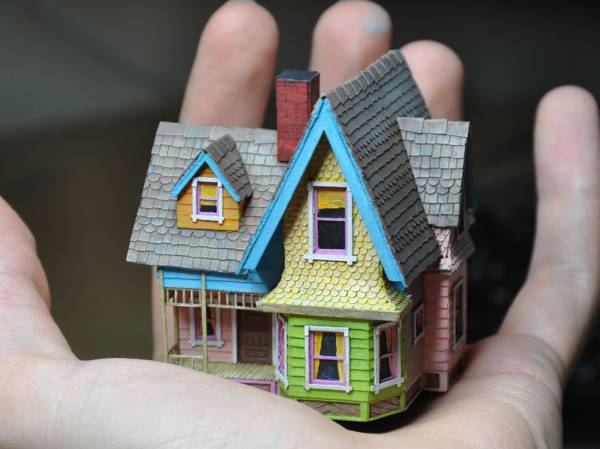 |
| courtesy http://tektonten.blogspot.com |
Years later when I went to do engineering, among the first things I learnt was Engineering drawing. I loved it. One of the things that we learnt there was very special to me, because it answered the question that I have had. Known as the 'Development of Surfaces', the problem was, given a solid object, we need to arrive at a two dimensional representation of it, in such a manner that one can assemble the solid object using these parts.
 |
| courtesy http://tmsjce.com/ |
I simply loved this aspect. one can create a sphere, a cylinder, or quite a complex model using sheets of paper, in a very precise manner. This is the process that is used all the time for fabricating complex structures, such as a funnel in a furnace, or a fuselage of an aircraft. You come up with the patterns, and cut large pieces of metal, and then weld them together. Actually quite simple.

Now almost two decades later, as I began learning 3D modeling for the purposes of animation, I was intrigued by a process that is known as UV unwrap.
 |
| courtesy http://en.9jcg.com |
This is part of the creation of a 3D model, particularly the surface texture. The process involves marking seams at the edges of a 3D object, and unwrapping it into a 2D surface.

Guess what...this precisely is development of surfaces. Once I figured this, I was hooked. The beauty is, once we identify the edges that should be cut, the software does the hard part of projecting these parts on paper, unwrapping it for you to apply any pattern.
Oh! The Joy of finding things out!